Key Takeaways
- Show your work. Build something useful. Know your stuff. Use original visuals.
- Multi-use landing pages that leverage SEO best practices support performance for Google Ads landing pages
The quick-and-dirty landing page era is over. Google’s raising the bar for what deserves ad traffic.
For years, Google has had an “Insufficient Original Content” policy that mostly collected dust. You could get away with templated pages, PPC-specific (think: no nav, all form), and recycled, thin content as long as your ads performed.
That grace period is over. Google’s enforcement has gone from occasional slap-on-the-wrist to systematic crackdown, making it rain ad disapprovals across accounts for anything that remotely resembles a poor LP experience. The message is pretty clear: if your landing page doesn’t offer something genuinely unique, you’re not getting ad traffic anymore. No warnings, no gradual rollout. Just disapprovals piling up in your account.
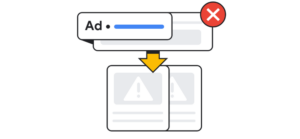
Why Does Google Ads Give Disapproval for Insufficient Original Content?
What gets you flagged? Google’s cracking down on four main themes:
- Pages that exist to show ads. If your landing page is basically a billboard for other advertisers, you get a flag. Google didn’t build a 2026 projected $300 billion ad business by sending its users to more ads.
- Copy-paste jobs. If you’re lifting manufacturer descriptions, scraping competitor content, or using the same template with minor tweaks across 50 pages, you get a flag. Google crawlers got scary good at detecting rehashed content.
- Redirect pages. Those “Click to continue” interstitials or email gates before the real content? You get a flag. Google wants users to land somewhere useful, not somewhere designed to immediately point them elsewhere.
- Pages that are gibberish or broken. You’d think this goes without saying, but there’s an alarming amount of auto-generated garbage floating around that reads like a malfunctioning bot with a keyboard.
So why now? First, AI has made it too easy to pump out mediocre landing pages at scale. Google’s drowning in spam and they’re using this policy as a filter. Second, their business model depends on users trusting ads. When someone clicks your ad and lands on garbage, they click fewer ads next time. Google has the data showing this hurts their bottom line, and they’re aggressively doing something about it.
Landing Page Best Practices for Google Ads in 2026: What Actually Works
- Show your work. Customer data, case studies, original research, anything that proves you didn’t just copy someone else’s homework.
- Build something useful. Interactive tools, configurators, things that require the user to do something they can’t do elsewhere. Google rewards utility over content dumps.
- Know your stuff. Don’t just say you’re an expert. Prove it with technical depth or perspectives that require actual domain knowledge.
- Use original visuals. Custom photos, your own diagrams, proprietary data visualizations. If Google’s reverse image search can’t find it elsewhere, that’s a signal you put in real effort.
As a PPC-er forever and always, here’s the tough one: if you’re running the same landing page template across multiple products with only the headline and a few bullet points swapped out, you’re on borrowed time. Knowing and using the standard practice in the PPC space of having pages specific to campaigns, this one hurts. Google recognizes this pattern now. Even if your text is technically unique, templated pages read as low-effort content.
So what now? Here’s where running both PPC and SEO under one roof pays off. While pure paid search agencies are scrambling to figure out content quality, Simple Search has been doing this for years. Google’s algorithm has been rewarding original, valuable content in SEO forever; now they’re just applying the same standards to paid landing pages. At Simple Search, we’re already ahead of the game. Let’s chat!
Contact our Google Ads Experts Now!