Travelers are increasingly turning to artificial intelligence (AI) to research destinations, compare experiences, evaluate travel brands, and plan their next vacation. Instead of clicking through multiple websites, consumers can now ask ChatGPT, Google AI Mode, or Perplexity for recommendations tailored to their specific needs.
For travel companies, this shift presents both an opportunity and a challenge. Traditional search engine optimization (SEO) remains essential, but ranking on Google is no longer the only way to influence a traveler’s purchasing decision.
Answer Engine Optimization (AEO) is becoming an important part of digital marketing for tour operators, hotels, cruise lines, airlines, and travel agencies. The goal is to make a brand’s information easy for AI platforms to discover, understand, accurately represent, and recommend.
Recent research reveals just how quickly the travel industry is adapting to AI-powered search, and why brands should be developing their AEO strategies now.
AI Search Is Becoming Part of the Travel Planning Journey
AI search is moving beyond answering simple questions. Consumers are increasingly using conversational platforms to compare options, explore destinations, and narrow their purchasing decisions.
According to Comscore’s Q2 2026 AI Intelligence Report, Google AI Overviews appeared in 39.4% of U.S. desktop searches in June 2026, compared with 25.8% in July 2025.
Travel is emerging as a particularly important category for AI discovery.
Research from Net Affinity and Smarthotel found that website traffic from AI assistants increased nearly 200% between March and August 2026 across their participating hotel properties, significantly outpacing overall website traffic growth of 32%.
However, AI assistants still represented just 0.4% of hotel website sessions in that dataset. This distinction matters: AI is growing quickly, but traditional organic search remains a much larger traffic driver.
For travel marketers, the opportunity is to establish AI visibility while continuing to invest in the SEO strategies that already produce measurable business results.
Travelers Are Using AI to Plan Vacations, but They Aren’t Ready to Let It Book
One of the most revealing findings from 2026 travel research is the difference between using AI for trip planning and trusting it to make a booking.
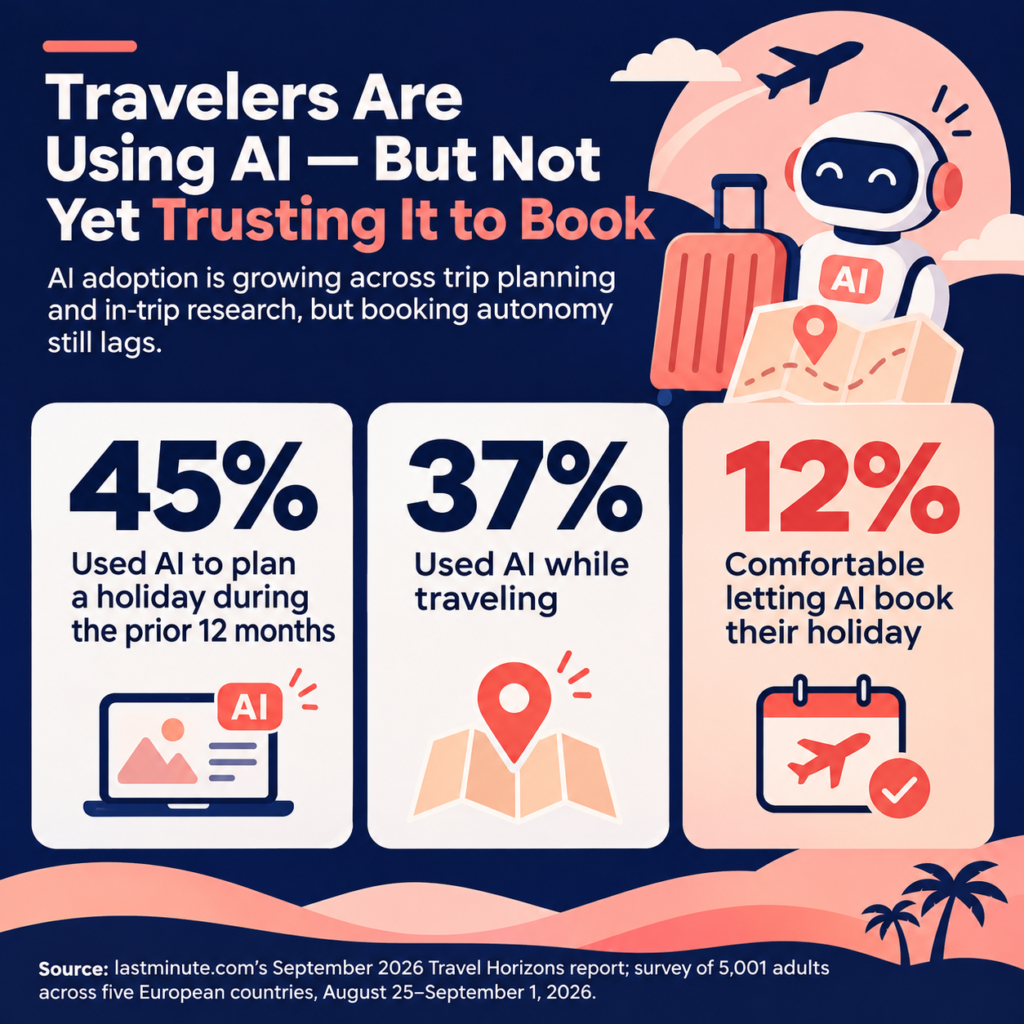
According to lastminute.com’s September 2026 Travel Horizons report, which surveyed 5,001 adults across five European countries:
- 45% used AI to plan a holiday within the previous 12 months.
- 37% used AI while traveling.
- Only 12% were comfortable allowing AI to book their holiday.
Consumers were much more comfortable asking AI to compare prices (40%), recommend brands (29%), provide travel inspiration (27%), and build itineraries (25%).
This behavior highlights an important distinction. AI is already influencing travel consideration and research, even though many travelers still prefer to complete purchases through a trusted travel provider.
There are also significant differences between age groups. Among those surveyed, 73% of Gen Z and 68% of Millennials had used AI to plan a trip, compared with 38% of adults over 55.
For travel companies serving older audiences, this reinforces the importance of a multichannel approach. AI discovery should complement traditional SEO, educational content, trusted reviews, and established booking experiences rather than replace them.
The AEO opportunity is not simply to generate more website visits. It is to influence which travel brands make the consumer’s shortlist before the booking decision is made.
Travel Is One of the Most Frequently Cited Categories in ChatGPT
AI visibility is particularly interesting in travel because ChatGPT references external sources at different rates depending on the industry.
A July 2026 analysis of Similarweb research, reported by Search Engine Journal in ChatGPT Links Out Most on Travel Queries, Data Shows, found that 22.6% of ChatGPT travel answers included citations, compared with an average of 6.8% across all categories in the measured U.S. desktop sample. The findings come from Similarweb’s 2026 Generative AI Landscape Report.
This suggests that travel-related questions present meaningful opportunities for websites and third-party publishers to be referenced in AI-generated responses.
Travel decisions often require detailed, current information. Travelers want to understand destination conditions, compare itineraries, evaluate accommodations, and determine which experiences offer the best value.
Consider a traveler asking:
What are the best guided tours of Italy for travelers over 60?
Rather than providing a generic list of tour operators, an AI platform may evaluate information about itinerary pacing, accessibility, accommodations, group sizes, traveler reviews, and included experiences.
A travel brand with detailed, well-organized destination content is better positioned to provide relevant information than one relying primarily on broad promotional descriptions.
This is where AEO and content strategy intersect.
Why Reviews and Third-Party Recommendations Matter for Travel AEO
Travel companies can no longer rely exclusively on the information published on their own websites.
The Similarweb research highlighted by Search Engine Journal also found that reviews and user-generated content accounted for 54.1% of ChatGPT’s travel-related citations within its analyzed citation sample.
That is significant for an industry where credibility, firsthand experience, and reputation strongly influence purchasing decisions.
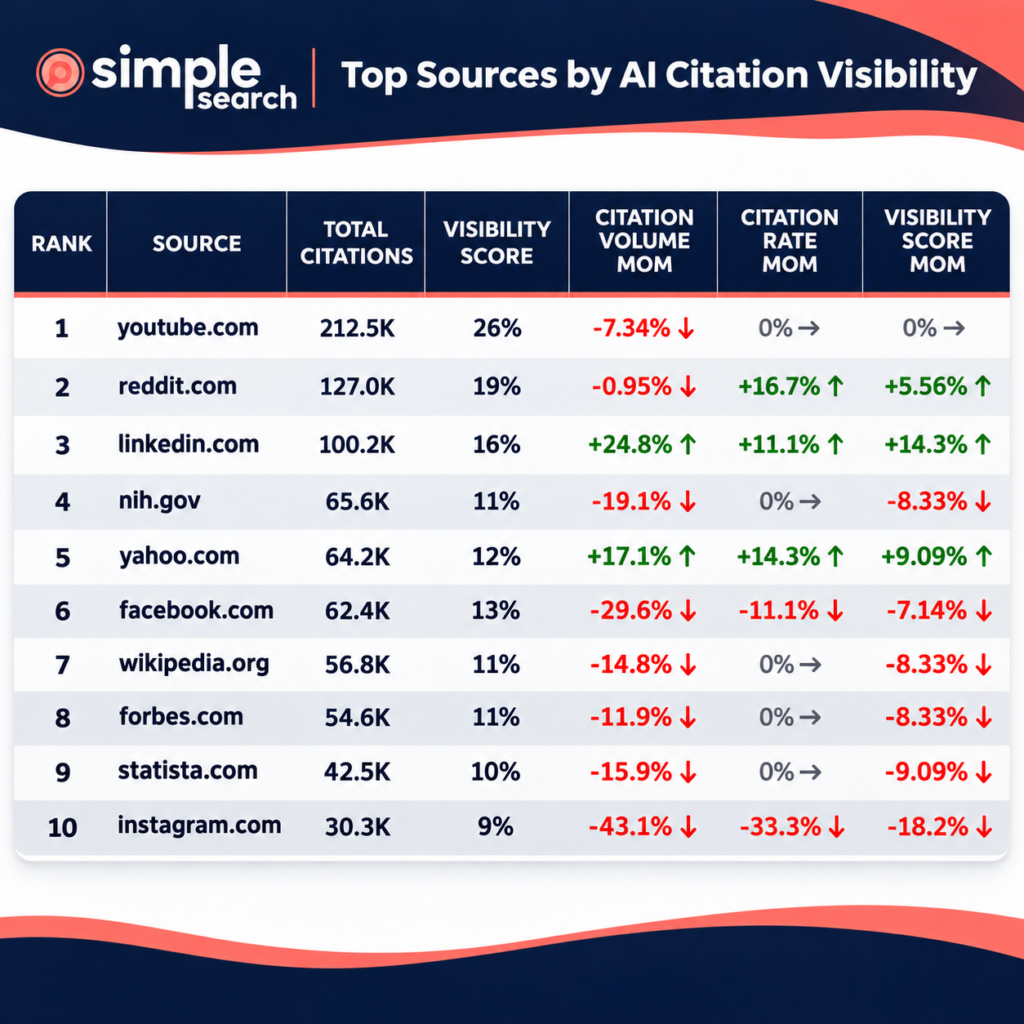
AI systems may reference publicly available information from review platforms, travel publications, YouTube videos, online communities, and other third-party websites when developing recommendations.
For travel brands, this creates an opportunity to expand their digital presence beyond traditional website optimization.
A strong travel AEO strategy should include a consistent review-generation and response process, relationships with credible travel publications, authentic traveler testimonials, earned media, and content that demonstrates genuine destination expertise.
Sites such as Reddit and YouTube can also provide important context through traveler discussions, reviews, and firsthand experiences.
As we explore in our 2027 SEO/AEO predictions about websites and off-site properties, optimizing your website is only one component of building authority in AI-powered search. Third-party profiles, relevant publications, expert contributions, and authentic community discussions all deserve attention.
However, simply generating more social media posts does not guarantee AI citations. The emphasis should be on publishing useful, accurate content that reinforces a brand’s expertise and gives travelers meaningful information to evaluate.
AEO is increasingly about what the broader internet says about your travel brand, not just what your website says about itself.
Content Freshness Can Make a Difference in AI Travel Visibility
Many travel brands have spent years developing extensive destination guides, travel blogs, itineraries, and educational resources.
The good news is that these established assets can remain valuable in AI search.
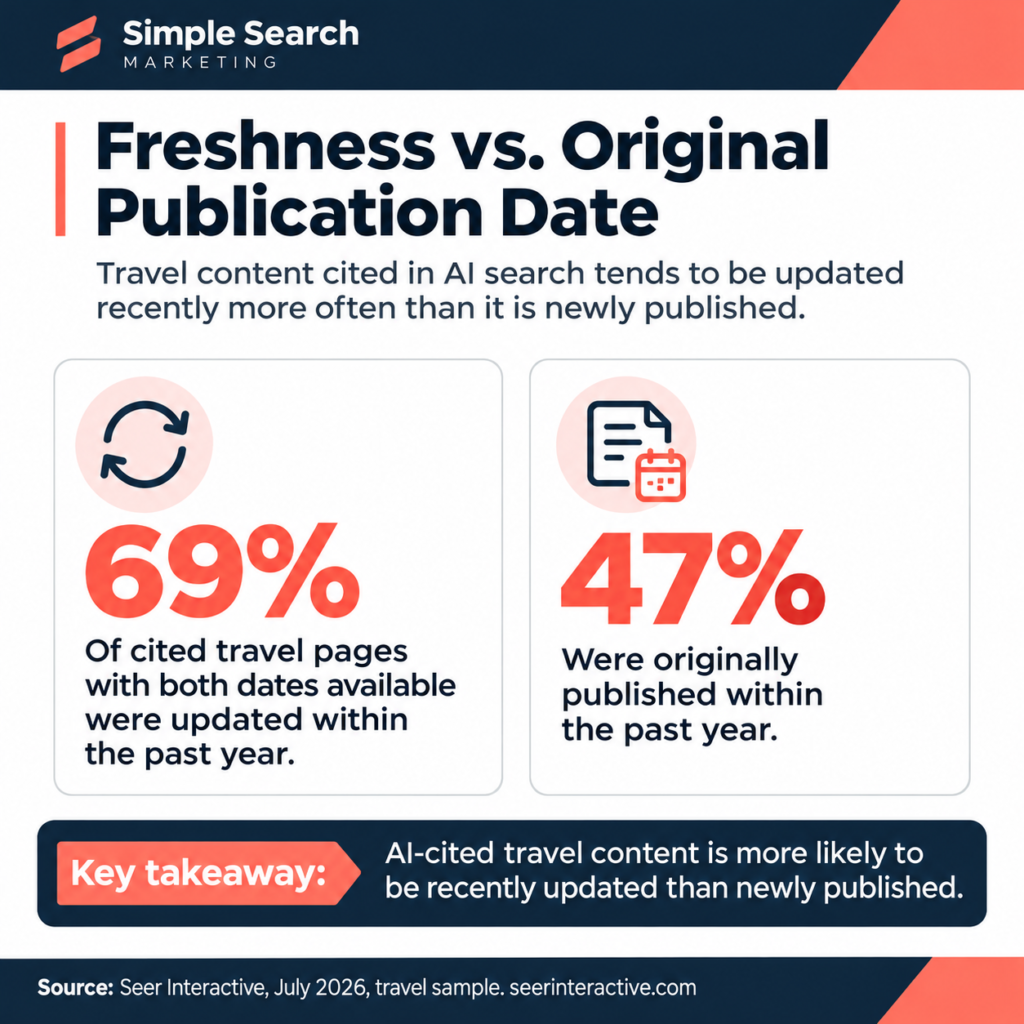
Research published by Seer Interactive in July 2026, Content Recency’s Impact on AI Visibility, found that, among AI-cited travel pages with readable publication and modification dates:
- 69% had been updated within the previous year.
- 47% had originally been published within the previous year.
The difference reinforces the value of maintaining existing content rather than exclusively investing in new articles. It is an observational finding, not proof that updating a page automatically improves AI visibility.
For travel companies, content freshness is especially important because travelers rely on information that can change frequently.
Destination guides should accurately reflect travel requirements, seasonal conditions, transportation options, attractions, itinerary availability, and other relevant considerations.
A guide to visiting Japan published several years ago may still have substantial SEO value. Updating it with useful, current travel information can improve the experience for users while keeping it relevant to the questions travelers are asking today.
Our article on building an AI-driven search content strategy outlines why traditional SEO fundamentals, clear content organization, and genuinely helpful information remain important for AI discovery.
At the same time, new content is necessary to address emerging travel trends, changing consumer interests, and topics that existing pages do not adequately cover.
For example, travel companies can develop comparison pages, destination planning guides, itinerary breakdowns, and answers to common traveler questions.
These resources should provide direct, specific answers rather than relying on generic promotional language.
As discussed in our guide to optimizing content for LLM discovery, organizing content into focused sections, leading with answers, and addressing relevant follow-up questions helps make information easier for AI systems to retrieve and interpret.
The strongest strategy combines ongoing content refreshes with targeted new content development.
YouTube Is an Important AEO Opportunity for Travel Brands
Travel is inherently visual. Consumers want to see destinations, accommodations, cruise ships, guided experiences, and attractions before making a purchase.
YouTube offers an opportunity to support that decision-making process while creating another searchable source of brand information.
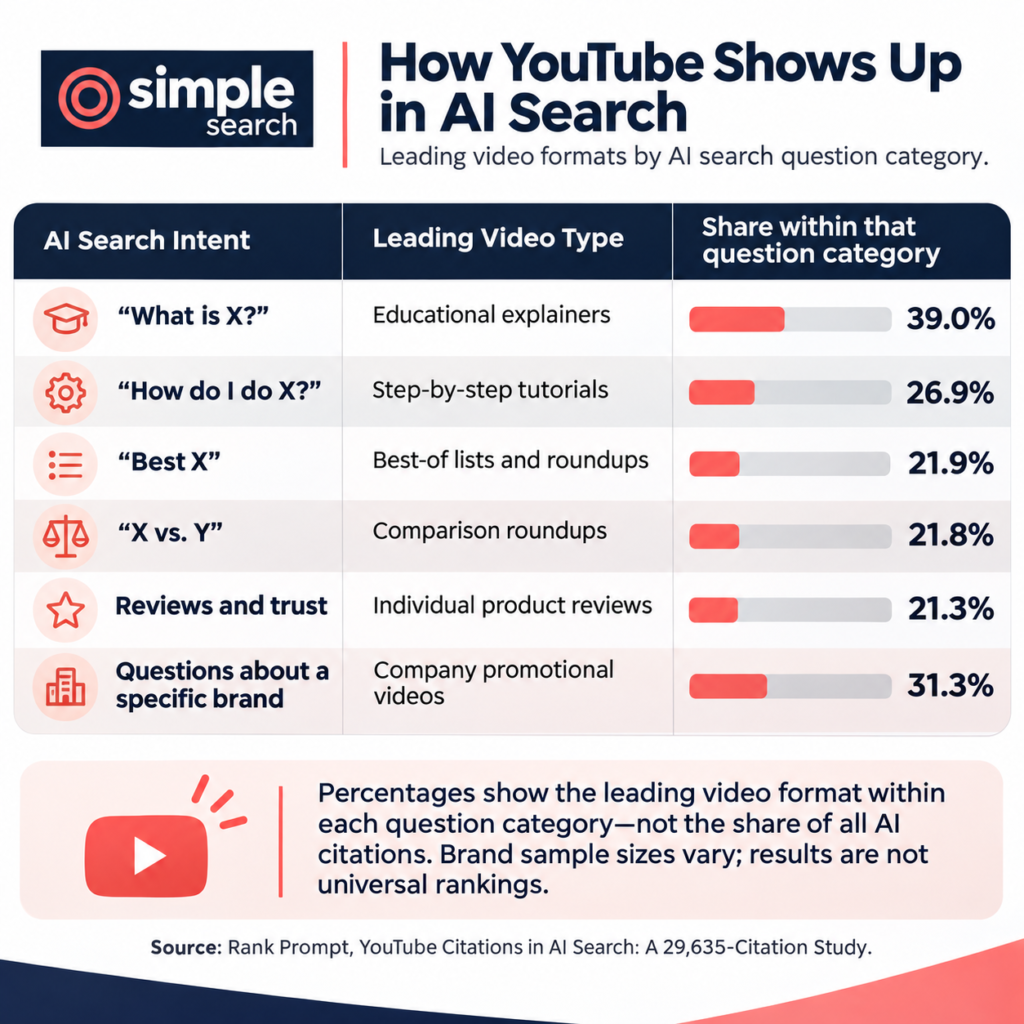
Long-form destination videos, itinerary explanations, travel comparisons, and educational content can provide the depth that both travelers and AI-powered search experiences need.
For example, a 15-minute video explaining what to expect from a guided tour of Portugal can address multiple questions about the itinerary, accommodations, cultural experiences, and logistics.
Travel brands should optimize their YouTube videos with descriptive titles, accurate captions or transcripts, detailed descriptions, and clearly labeled chapters and timestamps.
These techniques are covered in more detail in Simple Search Marketing’s guide to optimizing YouTube videos for search, including recommendations for video metadata, thumbnails, playlists, and website integration.
Embedding relevant YouTube videos within destination pages can also strengthen the overall content experience when supported by useful written information.
Structured data, particularly VideoObject schema markup where appropriate, helps search engines interpret video information such as titles, descriptions, thumbnails, and publication dates.
Video optimization does not guarantee placement within AI answers. However, it creates additional ways for travel content to be discovered and reinforces the brand’s expertise across channels.
Technical SEO and Schema Markup Remain Essential to AEO
While content and brand authority receive much of the attention in AI search conversations, technical SEO remains fundamental.
If search engines and AI retrieval systems cannot reliably access or interpret a website’s content, even excellent destination information may struggle to gain visibility.
Travel brands should ensure that important pages are crawlable, that essential content is accessible in the page HTML, and that internal linking clearly connects related destinations, itineraries, accommodations, and planning resources.
A strong internal linking strategy helps search engines understand the relationship between website pages while providing travelers with intuitive paths to related information.
For example, a destination guide about Italy could link to relevant guided tours, seasonal travel recommendations, packing resources, and articles comparing travel experiences.
Schema markup can provide additional context about the information presented on a website.
Depending on the business and page type, relevant structured data may include Organization, Article, BlogPosting, VideoObject, BreadcrumbList, Hotel, LodgingBusiness, and VacationRental.
For example, hotel schema can help search engines understand property details, while article markup can identify editorial content and its author.
Schema should accurately reflect visible page content and follow the relevant search engine guidelines. It is not a shortcut to AI recommendations, but it supports the technical foundation of search visibility.
The goal is to make it easy for both travelers and search systems to understand who the brand is, what it offers, and why its content is relevant.
Seasonal Travel Marketing Needs an AEO Strategy, Too
Travel demand is heavily influenced by seasonality, from summer vacations and holiday travel to Black Friday promotions and early-booking offers.
These periods create highly competitive search environments where travelers compare destinations, prices, packages, and promotional opportunities.
Travel brands should develop dedicated seasonal landing pages that combine useful planning information with relevant offers and clear paths to booking.
For example, a Black Friday travel deals page should go beyond a collection of promotional banners. It should clearly explain eligible destinations, offer details, booking windows, travel dates, restrictions, and frequently asked questions.
The same approach applies to Christmas travel, spring vacations, fall foliage tours, and other seasonal travel opportunities.
These pages can support traditional SEO while providing structured, relevant information that AI platforms may use when responding to seasonal travel questions.
Travel brands should also evaluate how paid media strategies can complement organic visibility during high-demand booking periods. Paid search and paid social can help capture relevant demand while organic SEO and AEO initiatives build longer-term visibility.
Digital public relations and authoritative backlinks also remain valuable. Coverage from credible publications can expand visibility and strengthen the brand’s broader online reputation.
Measuring AEO Performance Requires More Than Traditional Traffic Reports
One of the challenges facing marketers is that AI search visibility does not always translate directly into measurable referral traffic.
AI-generated answers may influence consumer decisions without producing a website click. Additionally, existing analytics tools do not always identify AI-related traffic accurately.
An August 2026 Search Engine Land analysis, What 9 Months of AI Overview Data and 51,000+ Tracked Events Reveal, examined more than 51,000 events identified as Google AI Overview-related on a transportation website.
The analysis found that 22.4% of those events were attributed to Direct traffic in Google Analytics 4 rather than Organic Search.
The study used an indirect detection method that can also capture other Google search features, so the finding should not be treated as a universal misattribution rate.
Nevertheless, it illustrates why travel marketers should evaluate their AI search measurement strategies rather than rely solely on default GA4 channel reporting.
As we explain in AI Referral Traffic Is Unpredictable. Here’s Why, changes in AI platform interfaces, citations, and answer formats can influence website traffic even when a brand’s underlying visibility has not changed dramatically.
This makes AI performance measurement more complex than simply looking at referral sessions.
A comprehensive AEO measurement framework should consider several performance indicators, including brand mentions across AI platforms, citation frequency, competitive share of voice, citation accuracy, AI-referred website sessions, and ultimately leads and bookings.
It is also important to monitor a consistent set of travel-related prompts over time. AI responses can vary by platform, user context, and query wording, making standardized tracking essential for understanding directional performance.
Accurate implementation of Google Analytics 4 and conversion tracking provides a foundation for evaluating visitor behavior, engagement, and business outcomes alongside AI visibility metrics.
For travel businesses, the ultimate goal should be connecting AI visibility to meaningful business outcomes, not simply reporting how often a brand appears in ChatGPT.
How Travel Brands Can Start Improving AEO in the Next 90 Days
Travel brands do not need to abandon their existing SEO strategies or completely rebuild their websites to begin improving AI search visibility.
The first step is understanding how AI platforms currently describe and recommend the business.
During the first 30 days, establish a baseline by auditing brand visibility across ChatGPT, Google AI Overviews, Gemini, and Perplexity. Identify which competitors appear most frequently, which sources the platforms cite, and where the brand is missing or inaccurately represented.
During days 31–60, prioritize destination guides, travel planning pages, comparison content, and other established resources with the greatest potential to influence traveler decisions. Improve content accuracy, answer-first formatting, technical accessibility, internal linking, and structured data while addressing important content gaps.
During days 61–90, expand off-site authority through credible travel publications, reviews, and optimized video content. Implement ongoing AI visibility tracking and evaluate referral traffic, engagement, and booking-related conversions alongside traditional SEO performance.
This approach helps travel companies build AEO capabilities while protecting their existing organic search investments.
The Future of Travel Search Is Both SEO and AEO
AI is changing how travelers discover brands, compare destinations, and make purchasing decisions. However, the evidence does not suggest that traditional search engines or travel booking websites are disappearing.
Travelers still value trustworthy information, firsthand experiences, transparent pricing, and confidence in the brands handling their vacations.
For travel marketers, the opportunity is to bring these elements together through a coordinated digital marketing strategy.
Strong technical SEO, high-quality destination content, credible third-party recommendations, and accurate analytics all contribute to both traditional search performance and AI visibility.
At Simple Search Marketing, we believe the most effective AEO strategies build on the same principles that have always driven successful SEO: relevance, authority, accessibility, and a clear understanding of consumer intent.
The difference is that brands now need to earn visibility across an expanding ecosystem of AI-powered search experiences.
Is your travel brand appearing when travelers ask AI for recommendations?
Simple Search Marketing’s AI Search Optimization services help businesses understand how they appear in AI-generated answers, identify competitive visibility gaps, and develop strategies that connect AI discovery with measurable marketing results.
Contact Simple Search Marketing to learn how SEO, AEO, content strategy, and analytics can work together to strengthen your travel brand’s visibility.