
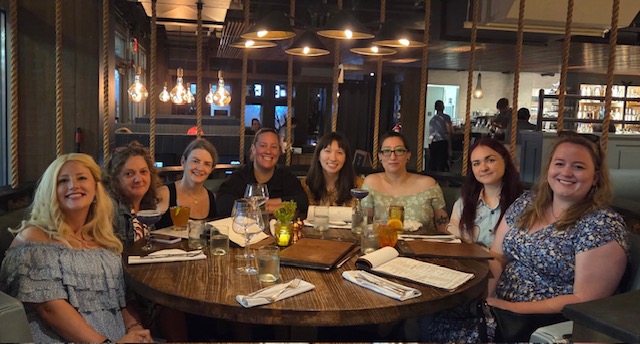
cheesin with some of our crew at the Jersey Shore
Three of us have been the client
Before we led Simple Search, all three of us sat on the other side of the table. Mary worked in-house at Dell EMC and GoDaddy/Afternic. Katie served as Head of Digital at Flight Centre Travel Group and Director of Marketing at the Greater Boston Chamber of Commerce. Catherine led paid media in-house at Staples and Philips, including Royal Philips’ LATAM media team.
We hired agencies. We managed them. We sat in meetings where we had to explain their reports to people who controlled our budgets. Some of those partnerships were great. Some taught us exactly what we never wanted to be.
Here’s what the client side taught us, and what we do differently because of it.
Six lessons from the client side
1. Your agency’s report becomes your presentation
In-house, an agency report doesn’t stay in your inbox. You turn it into slides for your boss, your CFO or your board. If there is no story and it’s full of metrics nobody upstairs cares about, you do the translating.
What we do well: we build reports you can forward. They lead with what happened to leads and revenue, explain why in plain language, and say what we’re doing next.
“In-house, I learned fast that typical agency reports didn’t help when it was time to talk strategy with a CEO who didn’t come from marketing. That’s why we build reporting around what each stakeholder needs, from self-service dashboards to short reports that don’t waste anyone’s time.” Katie Conroy, VP, Digital Strategy
2. Marketing is never your only priority
In-house marketers juggle product launches, sales requests, budget cycles, website projects and a dozen stakeholders. Search is one item on a long list.
What we do: we bring a clear point of view and a short list of priorities, so you aren’t left managing us. We flag what needs your decision and handle the rest.
3. Every dollar has to be defended
When budgets get reviewed, “brand awareness” and “impressions” are hard to defend. Spend that can’t be connected to results is the first thing cut.
What we do now: we check conversion tracking before any campaign launches, and we connect results to your CRM wherever we can. That way you walk into budget meetings with numbers that hold up.
“When I was in-house, I managed paid media budgets ranging from six to nine figures every year, and the size of the budget never changed the question leadership asked: what did we get for it? Attribution isn’t a big-company luxury. If you’re spending $5,000 or $50 million, you need to be able to show where every dollar went and what it brought back.” Catherine Gauthier, VP, Paid Media
4. Handoffs to junior staff are easy to spot
Clients notice when the senior people from the pitch disappear after kickoff. The questions get slower, the ideas get safer, and you end up explaining your business all over again.
What we do now: the senior strategists you meet are the ones who work on your account, from strategy through execution.
“When I was in-house managing global SEO and paid search for Dell EMC, our agency of record for paid media had enormous turnover. It was exhausting to brief every new, mostly junior, person at the agency on our company and campaign goals. My job was to focus on strategy, and it got bogged down in micromanaging partners.” Mary Smucker, Founder & CEO
5. Separate vendors create separate truths
With one agency for SEO, another for paid search and someone else for social, each report tells a different story. Getting them to agree becomes your job.
What we do now: one experienced team runs SEO, paid search and social, analytics and AI search, with one plan and one set of numbers.
6. The best partners tell you what they think
The agencies we valued most were the ones who pushed back when an idea wouldn’t work, and admitted when they didn’t know yet.
What we do now: if something is hype, we say so. If we don’t know, we say that too, then go find out. We test new AI search tactics on our own site before recommending them to you.
What this means for you
We understand what clients need because we’ve been clients. And we know how to deliver because we’ve spent years doing the work. That’s the idea behind big-brand experience with boutique-agency attention. You get people who have worked inside major organizations and on major agency accounts, without the handoffs, the jargon or the reports you have to rewrite. If you’re the person who has to defend your marketing results, we’d love to make that job easier. Let’s talk! Meet the rest of our team too!