How do you Measure ROI?
This is a hot topic of discussion whenever we (and partners) work with clients on more traditional brand building vs. lead gen campaigns.
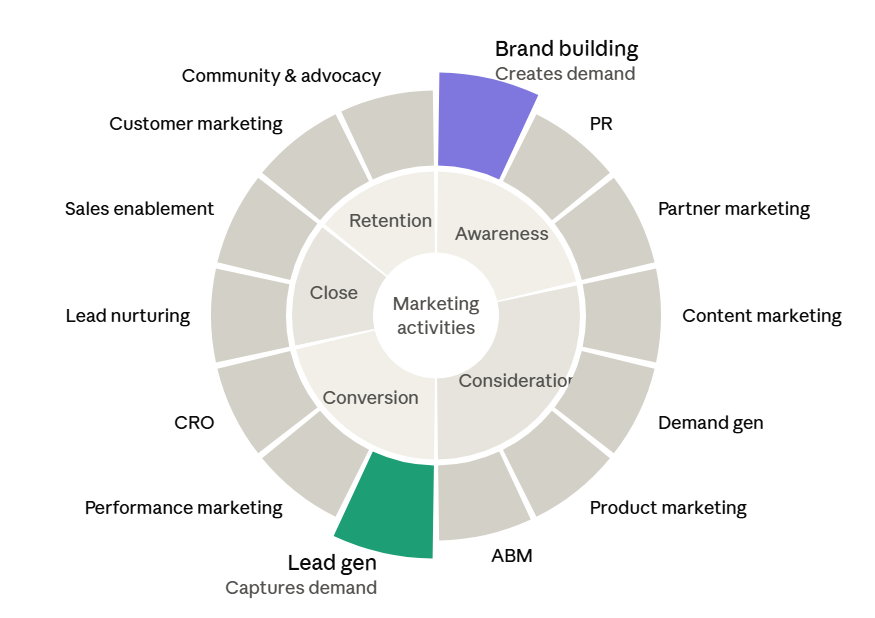
Brand building is aimed at shaping how a broad audience thinks and feels about you, so that when they eventually need what you sell, you come to mind first and they already trust you. It targets people who mostly aren’t buying right now, works through memory and emotion, and pays off slowly over months or years. Typical activities include video and display ads, sponsorships, thought leadership, organic social, PR, and consistent visual identity.
Lead generation is marketing aimed at capturing people who are already in or near a buying window and turning them into identifiable prospects, usually by getting contact details or a sales conversation. It’s targeted, measurable, and pays off quickly. Typical activities include non-brand search ads, gated content, webinars, demo and quote forms, and conversion-focused social ads. (our favorite 🙂
SSM was built to deliver tangible business results, AND we recognize the power and need for brand building. These need different measuring tools. Lead gen shows up in attribution reports, so it looks good there. Brand building mostly doesn’t, so it looks worse than it is. Click-based attribution also hands brand’s effects to lead gen channels, because the click that finally converts is sometimes a branded search or direct visit that brand work created.
The core framework to measure ROI
Lead gen: Tracks engagement and conversion. Easier to report interest, leads, pipeline and revenue numbers faster.
Brand: measure lift and demand, over a longer window. Brand ROI shows up as: more people searching for you by name (verified with GSC, etc. with higher conversion rates and lower CPCs as a result, increased direct traffic, but the effects build over quarters, not days.
Measurement by channel
- SEO and Search Console: Split branded and non-branded queries with a regex query filter. Non-branded clicks are your SEO lead gen. Branded impressions over time are one of the cleanest free measures of brand demand. Watch for them rising after brand campaigns. AI visibility is now partly measurable. Google’s generative AI performance report tracks impressions in AI Overviews and AI Mode, and launched June 2026 but reports impressions only and no click/query data. Useful to monitor your homepage and any brand related pages for lift (About, etc)
- Paid search: Report brand and non-brand campaigns separately. Never blend them into one ROAS number. Non-brand search is lead gen. Brand-term campaigns mostly capture demand that brand work created. Test their true value where you pause brand bidding. A hard test to get approval for when a CEO or board wants to show up EVERYWHERE ALL THE TIME AT MAX IMPRESSION SHARE FOR BRAND.
- Paid social: Use platform lift studies for both goals: brand lift for awareness and consideration, conversion lift for incremental leads. Expect retargeting to look great in attribution reports and much smaller in a lift test.
- GA4: Some 2026 additions are useful here: Conversion management lets you choose count type and attribution window to reduce discrepancies with Google Ads and the resurrected attribution analysis report shows assisted conversions and touchpoints by funnel stage. Assist data is where brand channels finally get some credit.
- Reddit & AI Engines/LLMS: Track your prompt set & compare where you are mentioned vs. competitors. Reverse engineer and get that bread.
A Good Way to Keep Tabs!
A simple brand scorecard reviewed quarterly, separate from the lead gen dashboard. Consider tracking branded search impressions, direct traffic, Generative AI impressions for homepage/biz-related pages, Lift study results & conversion rates and CPCs on performance channels
If those rise while lead gen spend stays flat, that can help prove your brand ROI case.
Other marketing activities in the same family
Most other activities sit between those two poles, at a different stage of the customer journey.
Demand generation. The broader umbrella covering both creating and capturing demand. In B2B it often means educating the market without gating content, so buyers are ready to talk to sales.
Demand capture / performance marketing. Harvesting existing intent: brand search, retargeting, shopping ads. It’s close to lead gen but includes direct sales, not just leads.
Content marketing. Useful material (articles, guides, videos) that can serve brand, SEO, or lead gen depending on whether it’s gated and who it targets.
Lead nurturing / marketing automation. Moving captured leads toward purchase through email sequences, scoring, and personalized follow-up.
Account-based marketing (ABM). Treating a defined list of high-value target companies as individual markets, combining brand and lead gen tactics for those accounts only.
Conversion rate optimization (CRO). Improving the share of existing traffic that converts, without buying more traffic.
Partner and channel marketing. Reaching customers through resellers, affiliates, integrations, or co-marketing with other brands.
Public relations and communications. Earned media coverage and reputation management. This is mostly brand, but it increasingly shapes what AI assistants say about you.
A useful way to organize them is by funnel stage. Brand, PR and community build awareness. Content and demand gen drive consideration. Lead gen, performance marketing and CRO drive conversion. Nurturing and sales enablement drive the close.
That’s a lot! What are we forgetting?